

 +86 873 3451971
Since its establishment in 2006, Xinjiang Hangfan Import and Export Trading Co., Ltd. has gone through a development journey of twenty years. From a trading company based in northwest China, to becoming a comprehensive enterprise covering manufacturing, agriculture, trade and supply chain services today, every step of Fan Yu has been marked by the footprints of exploration, pragmatism and innovation.
Phase One: Establishing a foothold in the frontier regions and making initial forays into the international market (2006–2011)
In 2006, the predecessor company of Fan Yu was established in Xinjiang, mainly engaged in border trade. In the following years, the enterprise gradually broadened its horizons to the wider Asian market: a branch was set up in Islamabad, Pakistan in 2007, a maritime trade department was established in Karachi in 2008, and it entered Mumbai, India in 2009. During this phase, Fan Yu, with a light-asset and flexible trading model, accumulated initial experience in cross-border circulation and market development.
Phase Two: Layout of Ports and Construction of Cross-border Channels (2012–2017)
As trade between China and ASEAN became increasingly close, Fan Yu continuously established branches in key ports in Guangxi and Yunnan of China since 2012, gradually building up a land-based logistics and customs clearance network connecting China and Southeast Asia. This layout not only enhanced trade efficiency but also laid the foundation for the subsequent scale-up of business.
Phase Three: Focusing on Southeast Asia and Promoting Regional Integration (2018–2021)
In 2018, Fan Yu established a trade branch in five Southeast Asian countries, marking a shift in its business focus to the entire Southeast Asian region. Subsequently, it successively launched regional transportation routes, formed a dedicated fleet for Cambodia, and set up a branch in Beijing in 2021 to enhance domestic coordination. By this time, Fan Yu had gradually transformed from a "cross-border trader" to a "regional supply chain organizer".
Phase Four: Extending the Industrial Chain and Building Systemic Advantages (2022 to Present)
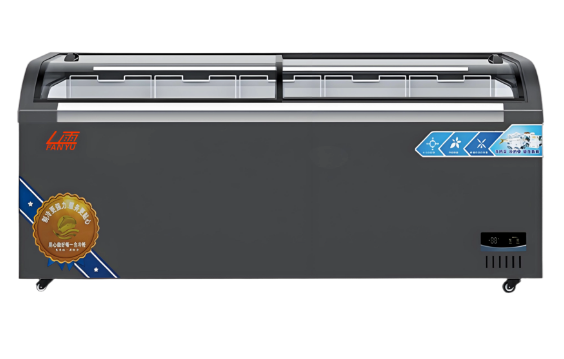
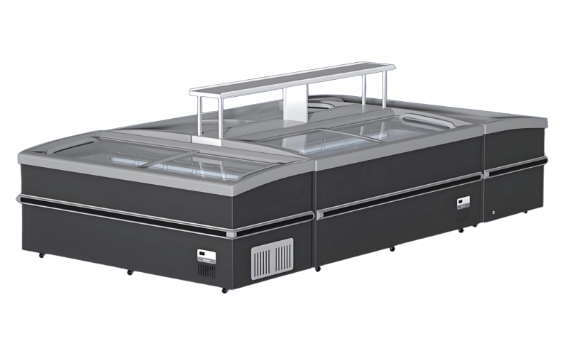
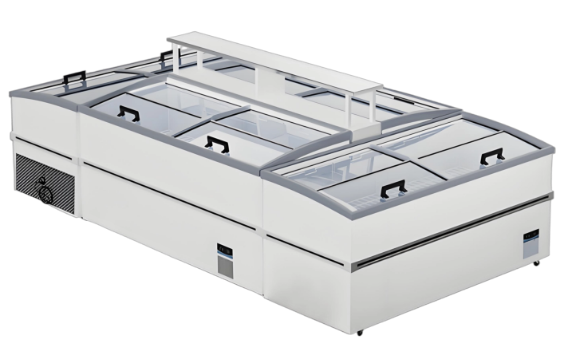
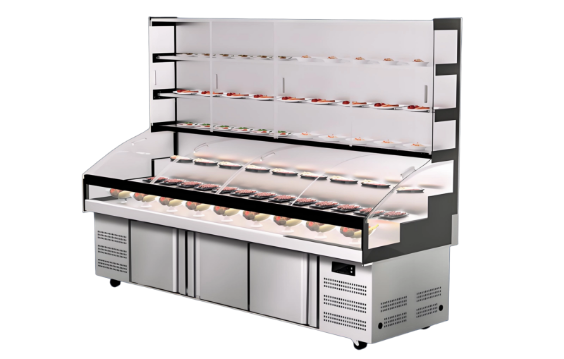
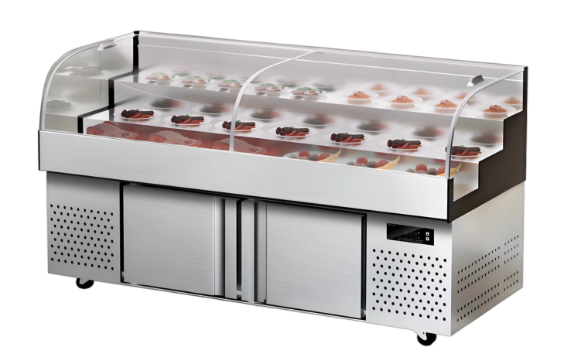
Since 2022, Fan Yu's development has entered a new stage of materialization and systematization: it has built its own ice cabinet factory in Shandong to achieve manufacturing autonomy; it has established agricultural planting bases in Xinjiang and Shandong to extend upstream; in 2025, it obtained the exclusive approval for importing refrigerators and cold cabinets in Vietnam, breaking through market access barriers; in 2026, it set up an e-commerce sales company in Vietnam to promote digitalization of channels. Thus, Fan Yu has initially completed the closed-loop layout of its industrial chain, which includes manufacturing, agriculture, trade, supply chain, and localized services.
Looking back over the past two decades, the development logic of Fan Yu is clear: starting from trade to open up channels, then integrating the supply chain through these channels, extending from the supply chain to physical manufacturing and the source of agriculture, and ultimately achieving deep-rooted presence in key markets with "compliance access + local operation". In the future, Fan Yu will continue to rely on this systematic capability to expand cooperation globally, and continuously provide customers with reliable products, stable supply and sustainable value.